
On Autocracy, Hungary, and the Cost of Crying Wolf - Observations from Hungary
Viktor Orbán has just lost a free election. That single fact should settle the debate, but only if we are honest about what the debate was actually about.
Nikola Kedhi
4/15/202612 min read
By Nikola Kedhi
Executive Director, Albanian Conservative Institute · International Observer, Hungarian Parliamentary Elections, April 2026
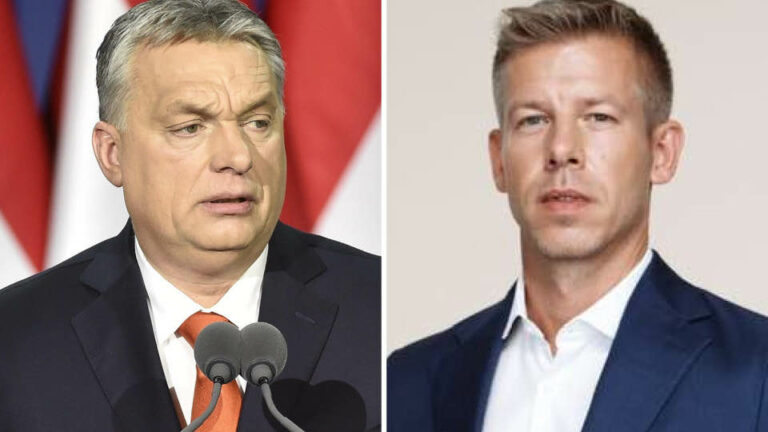
On the evening of April 12, 2026, Viktor Orbán, Europe’s most scrutinized, most attacked, most exhaustively theorized leader, conceded defeat in a parliamentary election. “I congratulated the victorious party,” he told his supporters. “We are going to serve the Hungarian nation from opposition.” And then he stepped aside.
This moment deserves more than a headline. It deserves a reckoning, not with Orbán, but with the analytical framework that spent sixteen years insisting he was an autocrat, and the institutions that spent those years treating the word as settled fact.
I had the opportunity of following the elections in Hungary as an observer. What follows is what I saw, what the evidence supports, and what those who care about democracy, real democracy, not the ideologically filtered variety, are now obliged to confront.
I. The Day the “Autocrat” Left Office
Let us begin with the fact that in a way ends the argument. Péter Magyar’s Tisza party won with over 53 percent of the vote to Fidesz’s 38 percent. Prime Minister Orbán conceded the same evening. No tanks. No emergency decree. No midnight constitutional amendment. No security forces deployed against protesters. The man whom the European Parliament formally designated a practitioner of “electoral autocracy” lost an election and left. As he had done before during his political career. Viktor Orbán is such a poor dictator that anytime he has lost the elections he has left office and has come to power through the ballot box.
This is not what autocrats do. Lukashenko did not leave. Maduro did not leave. Erdogan has not left. The leaders of Belarus, Venezuela, Russia, and Azerbaijan have not left, because the systems they built were designed to make leaving impossible through the ballot box. The fundamental operational characteristic of autocracy is irreversibility: the incumbent engineers conditions under which he cannot lose, and when results threaten that arrangement, he overrides them.
Orbán did not do this. He could not do this, because despite sixteen years of structural advantage, despite every reform his supermajority enabled, the Hungarian system retained the one property that separates a flawed democracy from a genuine autocracy: a sufficiently large electoral defeat could still remove him. And when that defeat came, it did. He did not use cartels, or the organized crime, nor did he stuff ballot boxes. Hungarians voted freely!
Magyar himself understood this. As the results emerged, he declared: “Today was a celebration of democracy.” Not a liberation from tyranny. Not the end of occupation. A celebration of democracy. The man who defeated the supposed autocrat used the language of democratic affirmation, not democratic restoration. That choice of words matters more than any academic paper written about Hungary in the past decade.
II. Why the Elections Were Free: The Structural Argument
The claim that Hungary’s elections were not genuinely free rested on several pillars. Having observed the process closely, having visited Hungary many times in recent years, having participated in debates and spoken also to regular people, and having examined the institutional architecture in detail, I can report that those pillars are considerably weaker than their confident repetition suggested, and that the elections were free in the only sense that ultimately matters: the outcome reflected the authentic preference of Hungarian voters, and that outcome was honored.
Let us begin with the count. In 2022, the election most frequently cited as the template of manipulation, the opposition deployed observers in virtually every polling station across the country. They ran a parallel vote tabulation alongside international monitors. It was the most comprehensively monitored Hungarian election in the modern era. They found no systematic fraud at the counting level. The OSCE, while noting structural imbalances in the campaign environment, concluded that the legal framework “forms an adequate basis for democratic elections to be held.” This year, the same observation infrastructure produced the same result: a clean count, and a result that no credible voice has disputed.
The National Election Commission, the Nemzeti Választási Bizottság, is composed of a delegated member from every parliamentary group including all opposition parties, and a member from every registered party. Its decisions are not made unilaterally by Fidesz appointees. This is a more pluralist structure than several Western democracies whose electoral integrity is never questioned.
Then there is the opposition’s own reach. During these elections, the opposition governed Budapest and the major cities with real budgets and real policy authority. Independent media operated throughout: Telex, 444, Direkt36, ATV, RTL Klub, the latter Hungary’s most-watched commercial television channel, RTL Klub, consistently favorable to the opposition. Magyar built his movement largely through social media and online television, in the same information environment theorized to be determinatively closed. Tisza held the largest YouTube presence of any Hungarian political actor. Hundreds of millions of euros from the European Commission, USAID, the National Endowment for Democracy, and allied foundations flowed to civil society organizations operating openly and without persecution. The opposition had observers everywhere. And it won.
A system that produces this outcome is not a closed system. It may be a tilted one, and the distinction is not semantic. It is the difference between a casino that skews the odds and one that rigs every hand. Hungarian voters, presented with a credible alternative and a sufficient margin, removed their government through the ballot box. That is democracy functioning, however imperfectly.
Intellectual honesty requires stating where the criticisms of Orbán’s governance have genuine foundation. There are two such areas. They deserve to be stated precisely, without the inflation that has distorted the broader debate.
The first of the two areas is the judiciary. Between 2010 and 2013, Orbán restructured Hungary’s judicial institutions in ways that reduced their independence. The Constitutional Court was expanded from eleven to fifteen members, enabling immediate Fidesz appointments to a majority. Yet, Courts have repeatedly voted against the government in many cases.
The second legitimate concern is structural electoral tilt. The seat-to-vote ratio consistently amplified Fidesz’s parliamentary representation beyond its vote share: in 2022, 54 percent of the popular vote translated into nearly 70 percent of seats. Analysts estimated Tisza needed approximately 5 percentage points more than Fidesz to achieve a simple majority.
But here is what must also be said: none of this prevented the result of April 12. The structural tilt was real. It was overcome.
III. The Definitive Case: Why Orbán Was Not an Autocrat
The word autocracy has a meaning. It denotes a system in which one person or party holds unconstrained power, in which the mechanisms for removing that power through legitimate means have been dismantled or rendered inoperable, and in which the incumbent governs without genuine accountability to the governed. This is the system that obtains in Belarus, Russia, Venezuela, Azerbaijan. These are not matters of degree.
What I am most concerned is the fact that if we have an inflation of the term “autocrat”, it will lose its meaning, and the real autocrats will hide behind this.
Let’s apply the test rigorously to Hungary across every relevant dimension.
Could the incumbent lose? Yes, and he did. Could the opposition organize, campaign, and reach voters at scale? Yes, it governed the capital and had strongholds in major cities, operated a functioning media ecosystem, received hundreds of millions in international funding through the civil society ecosystem, held rallies of hundreds of thousands, and built a movement from nonexistence to electoral majority in two years. Could voters access information critical of the government? Yes, the most-watched commercial television channel, the dominant online outlets, and the entire social media landscape provided sustained, substantive opposition coverage. Was the vote count honest? Yes, verified by opposition observers in every polling station, cross-checked by parallel tabulation, confirmed by the OSCE as procedurally adequate. And when Orbán lost, did he leave? Yes, without conditions, without emergency measures, without violence, on election night.
No definition of autocracy that retains any analytical utility can accommodate all of these facts simultaneously. A leader who loses a free election and concedes it is not an autocrat. He is a dominant-party incumbent who maximized every advantage available to him within a system that ultimately remained accountable to its citizens. That is a serious political criticism. It is not the same thing as autocracy, and the decision to treat it as such was an ideological choice dressed in academic language by those who saw him as a threat to the Brussels bureaucracy.
The most powerful formulation of this argument comes from the internal logic of democracy itself. Democracy does not require a perfectly level playing field. No democracy in history has produced one. Long-serving governments accumulate patronage networks, media relationships, institutional loyalty, and financial asymmetry as a function of incumbency, not of authoritarianism. Angela Merkel governed Germany for sixteen years with a public broadcasting system institutionally tilted toward establishment consensus and structural advantages that no opposition paper ever analyzed as democratic backsliding. Mark Rutte governed the Netherlands for thirteen years through multiple crises without triggering a single academic paper on dominant-party consolidation. Neither was called an autocrat, because when their electorates turned against them, they lost power and accepted the verdict. That is the democratic minimum. Orbán, on April 12, 2026, met it.
What he built, what scholars should have named from the beginning, was a dominant-party system with maximized incumbency advantages, significant but not total institutional capture, and a democratic floor that held when tested. The preference for “autocracy” and “electoral authoritarianism” over this accurate description was not neutral. It was political. And it had consequences that the defenders of genuine democracy are now obliged to reckon with.
IV. The Historical Record the Narrative Concealed
Honest analysis of Hungary requires including facts that were systematically omitted from the standard Western framing. Hungary in 2010 was operating on a 1949 Stalinist constitution that had been amended but never replaced during the 1989 democratic transition. The Constitutional Court had identified the need for replacement. Every serious constitutional lawyer knew the framework was inadequate. A new constitution was not Orbán’s invention, it was a recognized democratic necessity that his Socialist predecessors, who governed from 2002 to 2010 across two governments, failed to deliver. They also failed their electorate catastrophically: the 2006 Oszod tape, in which Prime Minister Gyurcsany admitted his government had lied “morning, evening and night,” was one of the most damaging acts of political self-destruction in modern European history. Orbán’s 2010 supermajority was democratically earned, in a free election, against a discredited incumbent. The decision to use it maximally is criticizable. The mandate itself was legitimate.
The reduction of parliament from 386 to 199 seats, cited as manipulation, brought Hungary in line with comparable European norms. The boundary changes in Budapest cited as gerrymandering were substantially driven by genuine demographic shifts: the depopulation of inner districts and the growth of the agglomeration, the correction of which is standard democratic cartography. These facts are absent from the standard narrative because they complicate a story that required a clean villain and a simple moral.
V. The Interference That Goes Unnamed
The European Commission withheld tens of billions of euros in cohesion and recovery funds from Hungary through conditionality mechanisms whose legal basis was contested from inception and whose application has been visibly selective. Poland under the Law and Justice government received similar treatment; funds were released with striking speed following Tusk’s election. The sequencing is not ambiguous.
If an external institution withholds funds of this magnitude to produce political change in a member state’s elections, the accurate description of that mechanism is economic coercion targeted at democratic outcomes. The Commission is not democratically accountable to Hungarian voters in any direct sense. Ursula von der Leyen was not elected by them. The democratic mandate of the body applying the pressure was, in every meaningful sense, thinner than the democratic mandate of the government receiving it. Orbán was accountable to Hungarians at the ballot box, as April 12 proved. The Commission answers to no comparable mechanism. Many mention the endorsement of U.S. President Donald J. Trump and the visit of U.S. Vice President JD Vance. However, they fail to highlight the EU Commission’s coercion and the endorsements of leaders across Europe for the opposition.
One can believe simultaneously that Orbán maximized structural advantages and that Brussels engaged in conduct that no serious democratic theory can justify. Both are true. Stating both is not a defense of Orbán. It is a defense of consistency, the very quality that analytical credibility requires and that the Hungary debate conspicuously lacked.
VI. The Price of a Broken Word
Words are tools. When a tool is applied carelessly, when it is used to describe everything that resembles the thing it names, without regard for the distinctions that make the name meaningful, it breaks. The word autocracy is breaking. And the consequences of that breakage are not abstract.
When we call Hungary an autocracy in the same register as Belarus, we tell Lukashenko’s victims that their experience is comparable to losing a coalition seat in Budapest. We tell Venezuelan democrats that their struggle is equivalent to a funding dispute between a member state and the Commission. We drain the concept of its moral weight precisely when that weight is most needed, when genuine autocrats must be identified, isolated, and confronted with the full force of democratic solidarity. The inflation of the term does not protect democracy. It protects the real autocrats, by making membership in the category carry no particular stigma.
There is a further consequence. When the specific factual claims underlying an autocracy designation, the captured electoral commission, the fraudulent count, the closed information environment, do not survive scrutiny, the target acquires a legitimate grievance. Orbán used that grievance effectively for years. The analysts and institutions who built an analytically weak case gave him the ammunition he needed. A stronger case, built on accurate foundations, the judicial restructuring, media consolidation, and applied consistently regardless of the target’s ideology, would have been far harder to dismiss. The weakness of the accusation was, in part, responsible for the longevity of the accused.
VII. The Work That Remains
April 12 has permanently settled that Hungarian elections were free in the foundational sense: they could be lost, they were lost, and the result was accepted. It has settled that the opposition had sufficient space, in media, organization, civil society, and urban governance, to build a winning coalition. It has settled that the structural tilt, while real and documented, was not determinative. And it has settled that when a Hungarian government is defeated at the ballot box, it goes home.
Hungarians are a conservative nation. In fact, the three parties entering parliament belong to the right of center spectrum, while the left is entirely non-existent. So, I am not quite sure what the global left is cheering on. As a conservative nation, they rejected the left wing alternatives in previous cycles. This time, they chose someone coming from Orbán’s party, promising more of the same in terms of immigration and Ukraine, and social issues. At least based on what Mr. Magyar promised during the campaign. It will be his responsibility to make them reality. But the idea that conservative policies were rejected or that Brussels won is entirely fiction and totally absurd. Hungarians could not care less what some unelected bureaucrat think. Not out of arrogance, but as many of them repeatedly told me, Hungary comes first to them.
Surely, there was also a tiring of the electorate after 16 years with Prime Minister Orbán, and in the last four years the economy was lagging. Maybe there was a disconnect between the elites of the party of government and the citizens. Certainly, Fidesz did not do enough in their outreach to young people, who voted overwhelmingly for the opposition. There is merit to the claim that the Hungarian government embraced an unpopular form of conservatism in the last term. Personally, as an Atlanticist, I saw with a sense of deep unease the Prime Minister’s rapprochement with both Russia and China, as well as his partial abandonment of free market. There is merit to the claim that the Hungarian government embraced in the last term. However, to Hungarians this was seen as in their national interest. We who comment from abroad, many without having set foot in Hungary, need to understand what they want, not what our wishes are.
Prime Minister Orbán is without a doubt a consequential political leader. The fact that he put a country of 10 million people into the radar of the whole world needs to be acknowledged. During his first 12 years he made considerable progress in terms of the economy, reversing population decline, stopping woke policies and illegal immigration. In the last two, he was proven right.
He inherited a country that had required an IMF bailout, with unemployment above eleven percent and wages among the lowest in Central Europe. By 2019, unemployment had fallen to 3.4 percent and average wages had nearly quadrupled. Hungary attracted major German automotive investment, built one of the lowest income inequality rates in the EU, and kept household energy prices lower than anywhere else in the union. His family policy, whatever its ideological framing, was the most ambitious pronatalist investment in Europe and produced a measurable rise in the birth rate. These are real achievements that touched the daily lives of ordinary Hungarians, and they are precisely the achievements that Western commentators, fixated on institutional questions, systematically ignored. That ignorance was not incidental. It is why sixteen years of analysis failed to explain why Hungarians kept voting for him, and why the same analysts were surprised by Magyar’s winning formula: not a rejection of what Orbán built in the first decade, but a verdict on what occurred in the second.
In the end, democracy is not a binary condition. It exists on a spectrum, and every point on that spectrum deserves its accurate name. Hungary under Orbán occupied a somewhat compromised position on that spectrum, but one closer to the democratic pole than the authoritarian one, and now demonstrably capable of the thing that matters most: the peaceful transfer of power through the voluntary act of citizens casting ballots. To have called that autocracy was not merely imprecise. It was an intellectual failure, and intellectual failures in the service of democracy ultimately serve its enemies.
The real autocrats were watching the Hungary debate for sixteen years. They found it useful. We owe it to their victims, and to the integrity of the democratic idea, to understand why.